
Why a side‑by‑side matters for outdoor comfort
When you’re deciding between models, it’s not enough to like how a fan looks — you need numbers that translate into real comfort on a humid evening. Comparing airflow (CFM), light output (lumens), power draw (wattage) and weather protection (IP rating) tells you which unit will actually perform in your space. For many homeowners in warm coastal cities like Miami, an effective fan can mean the difference between opening windows and enjoying the patio — and small choices affect energy use. In fact, the U.S. Department of Energy notes ceiling fans let people raise the thermostat several degrees while staying comfortable, which can reduce HVAC load. If you’re shopping for outdoor patio ceiling fans, this comparative view keeps conversations practical, not just pretty.
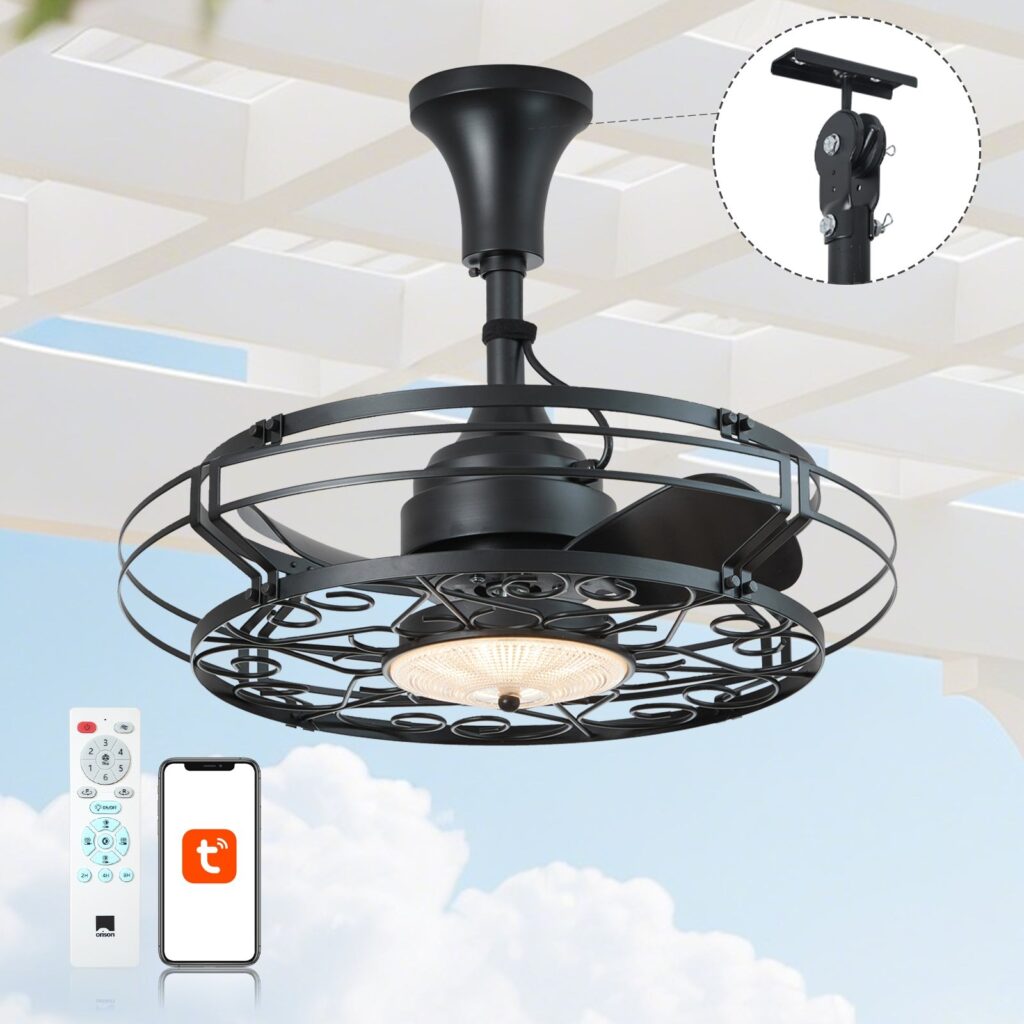
Core comparison metrics you should demand
Keep the review to three objective categories: performance, lighting, and connectivity. Performance = CFM per watt, motor type (DC motors usually beat AC for efficiency), blade pitch and mounting options (downrod vs flush). Lighting = lumens, color temperature (Kelvin), and whether the fixture supports dimmable drivers or presets. Connectivity = native Wi‑Fi, Zigbee/Bluetooth mesh, compatibility with voice assistants and whether the app supports scheduling and scenes. Also check noise measured in sones and verify UL listing for wet locations if your fan will face sea spray or heavy rain.
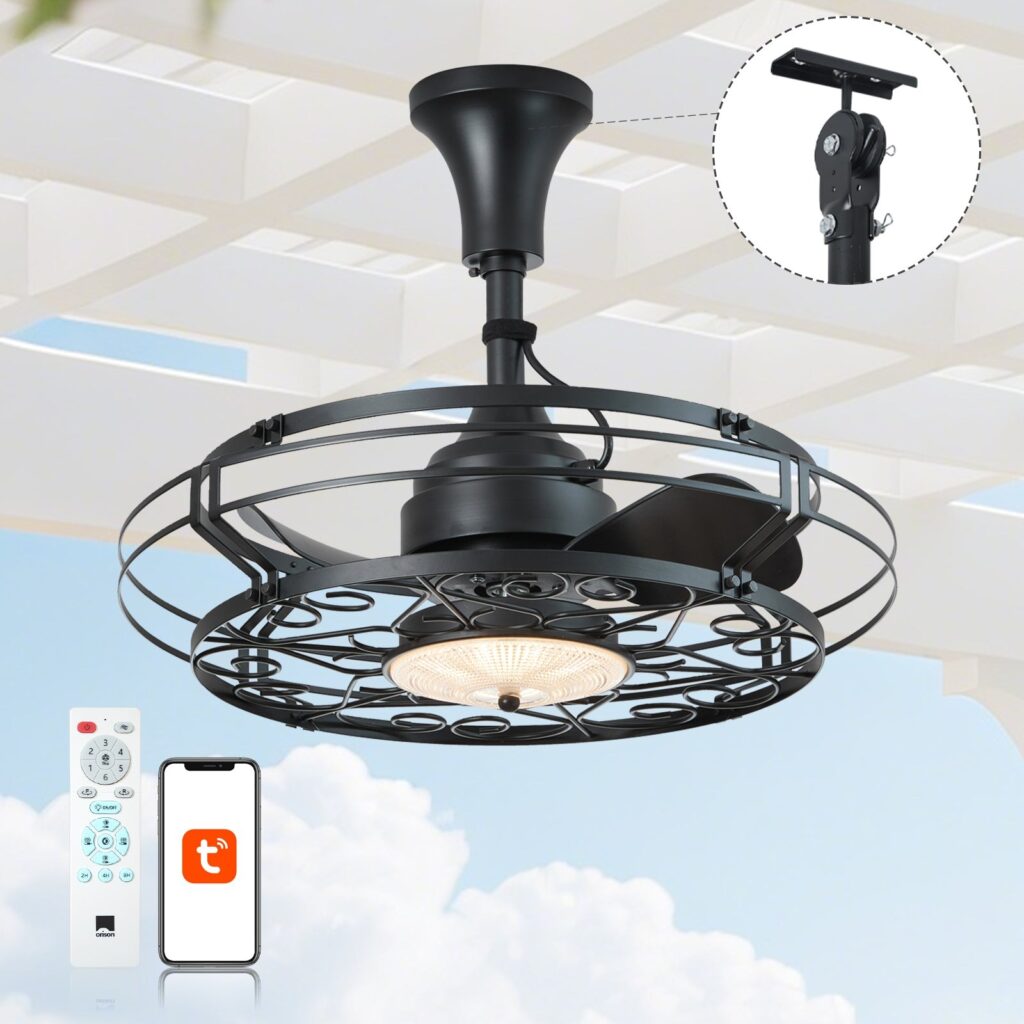
How modern models compare in real use
In side‑by‑side testing, fans with DC motors typically delivered higher CFM per watt and quieter operation than legacy AC units; that’s why many premium models advertise DC motor efficiency. Integrated LED modules vary more: some provide neutral white (3500–4000 K) at high lumen output but cost more up front. Weatherproofing often separates good from great: an IP44 rating protects against splashed water, but if your pergola is exposed consider IP55 or a wet‑location certification. Finally, look at mounting geometry — a small 8–10 ft. covered patio may favor a flush‑mount for headroom, while a tall gazebo benefits from a downrod for optimal blade sweep.
Smart integration: when it’s essential and when it’s fluff
Smart features can add real value — scheduling, geofencing and multi‑device scenes improve convenience. But beware of closed ecosystems that force you to use a single app or hub; open standards (Matter, Zigbee) are preferable if you plan to expand. If you want voice control and automation, check whether the fan supports OTA updates and whether the vendor provides an API or integration guide for third‑party apps. For patios wired to older boxes, confirm whether the unit needs a neutral wire or offers a battery‑backed remote — installation constraints matter. —
Common mistakes people make when buying
Most missteps come from mismatching capacity and environment. Too small a CFM leaves the space muggy; too large a blade sweep in a delicate structure creates dust and vibration. Other errors: assuming IP44 is enough for every outdoor use, neglecting the noise spec (sones), and forgetting to test the light temperature alongside the fan’s output. Also, don’t skip a trial with your actual fixtures — sample‑stage testing on your mount and fill line is as relevant for fans as it is for lighting fixtures.
Alternatives and who they suit
If you prioritize silence and efficiency, seek units with brushless DC motors and high blade pitch; they’re pricier but pay back in lower energy bills. For mood and hospitality — restaurants or lounges — choose fixtures with tunable white and RGB accent options to match the décor. If durability is the main concern for coastal installations, pick fans with stainless fasteners, marine‑grade bearings and higher IP ratings. And if you want a simple retrofit without rewiring, look for models offering a handheld remote or a wall control that uses the existing wiring.
Short checklist before you buy
– Confirm CFM, wattage and sones for the desired airflow and noise balance. – Verify IP rating or wet‑location certification for your region. – Check motor type (DC preferred for efficiency) and mounting compatibility. – Decide whether you need open smart standards (Matter/Zigbee) or simple Wi‑Fi control. – Ensure the light module offers the Kelvin range and lumen output you want.
Three golden rules — Advisory close
1) Measure what matters: prioritize CFM per watt and sones over marketing claims. 2) Specify the environment: pick IP rating and corrosion‑resistant materials that reflect local climate — coastal salt is brutal. 3) Pick open smart standards: favor devices that play nicely with the rest of your home automation to avoid vendor lock‑in.
Choosing the right outdoor fan for patio with light is mostly about matching real metrics to real spaces — when you do that, a well‑specified fan reduces energy use and raises comfort without drama. For well‑rounded solutions that combine airflow, durable outdoor build and smart integration, many owners find the balance they need with modern options like those from Orison. —